Job Search Series | Chapter 3: Getting the most out of your job recruiter relationship

Over the course of my job search journey I worked with a handful of recruiters and it was their connections and job leads that landed me many more interviews than I was able to scare-up on my own. However I also learned rather quickly that the recruiter + job seeker relationship exists in only two temperatures: boiling hot or ice cold.

When there was a job on the line that matched my qualifications, they couldn’t get enough of me. There were constant phone calls, emails and texts flying back and forth, not to mention coaching sessions and more positive affirmations than you could shake a stick at, “You’d be so great for this position” – “I think you’re the perfect fit“. This overabundance of special attention ensued up to and immediately after the interview.

But if things didn’t work out for one reason or another… poof. Gone.

No more phone calls (either placed to me or even returned in some cases), emails and texts dried up as well and it was as if we’d never known each other at all. Which I do understand to a certain degree, I mean they aren’t in recruiting to make friends they’re doing it to make money – and they need to place people in jobs to do that. What I don’t understand is why it needs to be so hot and cold. Surely other job leads will come along, although to be honest, I don’t know if I want to continue working with you after feeling like I was dumped right before prom because someone better came along. You know?

So without further ado, here are my top 5 tips for getting the most out of a mutually beneficial recruiter + job seeker relationship:

1. When you’re approached by a recruiter with a job opportunity, always ask for a job description (if it’s not automatically provided). Although even when it is, I found that 50% of the time the job was not a right fit. If that’s the case, you want to find out asap so you don’t waste time on something that isn’t a good use of your skills and experience.

2. This is an extension of the first point: make sure the recruiter really understands your work experience, what you’ve done and where you want to go. If a recruiter isn’t asking questions and doesn’t seem invested in helping you achieve your career goals, you’re most likely dealing with what I call a speed recruiter. These folks are moving a mile a minute and trying to fill job openings like it’s the last few seconds in a game of musical chairs. In other words, they are not looking for opportunities that will benefit you the most. Instead, work on developing relationships with recruiters who ask questions and stay in contact… you don’t need to waste time with the ones who are just running you around in circles.

3. Connect with your recruiter on LinkedIn and vet them as much as they’re vetting you. Do they have a lot of connections? Recommendations? How long have they been in recruiting? Someone with a soft presence on LinkedIn might not be the best choice to help you achieve your goals, especially if they are trying to figure out their career themselves.

4. Also research the recruiting company and see how long they’ve been in business and who their clients are. Is this an established firm or someone working out of their garage? Remember this is your career on the line. Just because someone reaches out doesn’t mean you have to engage if you don’t think it’s a right fit.

5. Watch/observe their communication style. Are they prompt in responding to you? Do they speak/write clearly and articulately? It’s important to make sure the recruiter is knowledgeable and professional, as they will be representing you to the client throughout this process (aside from any 1:1 interviews). You want to be sure they know what they’re doing and know how to make you a good deal.

Good luck on your job search and let me know if there are any other tips I should add to this list!

Job Search Series | Chapter 2: Know your worth and negotiate for the salary you deserve

For the second chapter in this series, let’s talk about probably the most sensitive point in the job search journey: the compensation conversation.

In some ways I wish this would happen sooner rather than later, as a way to clear the air and align expectations. Everyone has their own unique budgeting needs and if what they are willing to offer is not something you can accept it would be better to know that at the outset. Unfortunately that’s not usually how it works, so here are some hints and tips to help you make a strong case for getting the salary you deserve.

Check The Averages

In this age of the internet and all of the bountiful information at our fingertips, job seekers are probably better positioned than they’ve ever been to gather salary data and understand what the averages are for whatever position it is they’re applying for.

My advice is to start local to understand what’s going on in your area and then build from there. Obviously salaries between San Francisco and St. Louis are going to vary, so get a read on your region and/or state to use as the foundation for your research.

Sites like salary.com and indeed.com have salary estimate calculators that allow you to search for averages based on job title and location. Also as you can see the salary.com screenshot, they have additional tools to help tailor your search with drop-down menus for: company size, your level of education, years of experience, etc.

Salary Dot Com

So take a look before you head into your final discussions, as both of these sites are excellent places to gather information to assist you in preparing a solid counteroffer based on hard facts.

Indeed Dot Com

Additionally the Bureau of Labor Statics released a report on national salary averages in May 2014 that is also worth taking a moment to review. Again adjustments should be made to account for your particular region – and also the fact that this report is almost 2 years old – but it never hurts to gather more information to help round out your research.

Assess The Current Marketplace

Besides checking nameless, faceless salary calculators, do a bit of sleuthing in the current marketplace to see what salaries are being posted online with job postings. This admittedly is more involved research as a lot of companies don’t post salary ranges, but taking a quick trip over to Glassdoor.com could help get you the answers you seek.

It’s also a worthwhile exercise to look at the company’s ratings and reviews to make sure you aren’t heading into a place with a high turnover rate or some other internal turmoil – that of course wouldn’t be shared with a potential candidate.

As you can see in the screenshot below, the tabs across the top allow you to filter the information on reviews, salaries, benefits and more. Note: You’ll get more information if you create an account and log into Glassdoor, but that’s not necessary if you simply want an overview.

Also keep a grain of sand in your back pocket and remember: #1. This is the internet. #2. The information posted has not been vetted by Glassdoor, or anyone else, to confirm it’s 100% accurate and coming from actual employees. That said, it’s still worth taking a look at to better inform yourself.

Glassdoor Dot Com

Know When To Hold ‘Em, Know When To Fold ‘Em

Now for the tough part. Because at the end of the day you can gather as many facts and figures as you can find and prepare a brilliant speech, but the truth is negotiating is not for the faint of heart. If you’ve never played a game of poker in your life, really think through how you want to proceed because there are no guarantees and a company (that you’re not even employed with) owes you nothing.

So if you’re going to present a counter, be ready for the following:
• To hold your ground.
• Be willing to settle for less.
• Or worse case be willing to lose the opportunity – whether that means you walk away or they rescind.

As I said, not for the faint of heart, and if any of those scenarios are not something you feel comfortable with – reconsider your position. It might not be worth jeopardizing guaranteed employment, assuming they’ve made an offer already.

However if you’re in a place where you can be a bit risky, then by all means prepare your counteroffer. Start by taking the local and national salary averages you’ve gathered, although don’t be afraid to omit anything that doesn’t make sense for your situation, and stack those up against what’s being offered. If it’s within a reasonable range, perhaps just asking for a slight bump or even a couple extra vacation days is appropriate. If it’s not even close, then refer to the three bullet points above because you’re probably in for a battle.

In whatever you decide though, best of luck and please post in the comments below how things turned out!

Job Search Series | Chapter 1: Presenting your best self without overplaying your hand

When I started this blog it was with the idea that I would take real life experiences on the job and share my insights, successes – or failures – and hopefully impart some knowledge that others would find useful. So, since I’ve been in the midst of a job search over the last few months, I decided to focus the next few entries around that theme and create a Job Search Series of posts.

This first post, aka “Chapter 1”, will focus on tactics for presenting your best self during phone or in-person interviews, as well as a cautionary tale from a situation that may have cost me a new position. So let’s get to it!

Chapter 1 Tactics

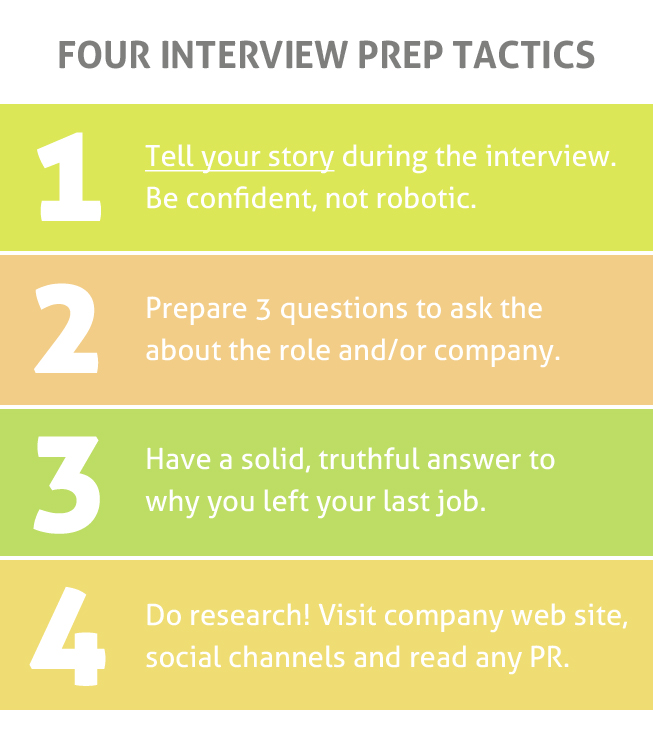
Here are more details on the Four Interview Prep Tactics to help you present your best self when meeting potential new employers:

1. Think about how you want to tell your story during the interview, but don’t be so overly rehearsed that it sounds like you’re trying out for a high school musical. The key word here is “story” and conveying yourself in a confident but relaxed manner – not robotically as though you’re reading bullet points from cue cards. Also look through your resume, or reflect on past positions, and come up with a short list of relatable projects that highlight your work experience and how well you’d be suited for the new role.

2. Have at least 3 follow up questions prepared for the interviewer at the end, when inevitably they will turn the tables and want to know if you have questions. This is nearly as important as the first part of the interview, because it shows you’ve thought about the position and the company that you hope to work for. As a freebie, a question I’ve always had success with is, “How big is the team I’d be joining?” or something along the lines of asking how the team is structured.

3. If you were laid off or let go from your last place of employment, have a solid answer ready because it will come up – and probably earlier in the conversation rather than later. Also it should go without saying, but be completely transparent about what happened. You want your answer to match was the HR department would say at your past company if the new employer was to call and ask.

4. Do your research! Scour the company website, read the “about” section and Google for any articles in the press. Also an audit of their social media channels can be helpful if you’re joining a B2C company that consumers would follow and comment on. Once you’ve done that, prepare a few key phrases you can weave into the conversation letting them know that you have looked over their digital assets/web presence. (Just try not to sound like a know-it-all… and if you’re a regular reader, you already know my views on smarty-pants-people.) In a nutshell, you’ll flush any bonus points down the drain if you come across as an outsider attempting to tell the interviewer what’s going on in their own house. You dig?

Now to the cautionary tale portion of the story… Which requires a little bit of backtracking, but I promise I’ll keep it brief.

In my previous job search expeditions, I’ve created mock proposals and taken them along on interviews as a special guest star in the “all about me” pitch. This was done in part to show my enthusiasm for the position but also because I’m a creative person with an imagination on overdrive and I wanted to showcase those skills as well. And with my last couple jobs, either it worked or it didn’t do any harm, because I ended up getting the position! Based on those successes, in my mind, this was the clincher; a home run idea and a way to absolutely differentiate myself from the herd of other candidates the employers were sorting through.

So why wouldn’t I continue this practice in the job search I’m going through now?

Fast forward to a couple months ago when a particular job opening came to my attention and after reading through the job description, I felt confident I could “rock it” and absolutely be able to execute on the tasks they’d laid out for the new hire to achieve. Also it’s important to note the position was one step up from where I’ve been in the past – but what’s the point of life if you’re not trying to better yourself and grow as a person? So I applied.

Not long after I was chosen to come in for a half-day interview process with some of the company’s executives, and in advance of that I carefully crafted what would be best described as a 30-60-90 day plan. Essentially it was a roadmap meant to convey, “If you hire me for this position, this is my game plan for completing the tasks and goals you’ve laid out in the job description.”

Once I’d completed the document I was bursting with pride. Not only was it full of great content and strategic planning, but I’d also artfully laid out in InDesign (a nod to my graphic design roots) so it looked very sharp and I thought I had the position in the bag. Who else was going to come in with a fully realized plan for the goals, large and small, included in the job description?

full house

This last part of the story, admittedly, is without a lot of specific details. But that’s only because I don’t have them to share, not because I’m holding back. (Believe me if I knew what went wrong I would tell you as I’m dying to know myself.) Anyway the post-plan epilogue is as follows… So I have the multi hour interview with the executives and share my 30-60-90 day plan. One exec seemed very impressed, while the other only seemed mildly interested and unfortunately it would seem the 2nd individual was the one calling the shots.

About a week after the interview, the 2nd individual called and said that while they liked me very much and thought I had a strong background, they were looking for someone more seasoned for the (higher level) position. Ouch.

It baffled me for weeks how my bright and sparkly 30-60-90 day plan had failed me. Surely no one else had come in as prepared… So where did the breakdown happen? Then the other day I was reading an article in which the writer said, “Some people think that anything offered for free is without value.” Hmm.

As I said earlier, with no specifics I can’t say for sure what happened in my situation and/or if the thought behind that quote was part of the reason the company decided to pass on me for the higher level role. But it certainly gave me cause to pause, which is why I’m sharing this insight with you here and now.

While it is most certainly beneficial to showcase your unique creativity and talents during an interview – at the same time, don’t give the farm away. Perhaps things would have ended differently for me if I’d only referenced the plan I had in mind versus bringing a hard copy blueprint to the interview. In that alternate reality I still could have showcased strategic forethought and creative insights, while at the same time refrained from shilling my wares on the corner for anyone to scamper off with.

For me that is the lesson learned – and I hope it’s helpful to you as well.

The Anatomy of a Performance Review

To be honest, I think an informed and productive performance review is right up there with hitting a hole in one. Not to say that it couldn’t happen – and certainly it does happen from time to time – but it’s a rare occurrence, which makes most of the reviews given equal parts depressing and disappointing.

In light of that sad truth, often times a performance review becomes a game of passive-aggressive political maneuvering in which your supervisor might try to perpetuate a personal agenda or simply use it as a time to vent while veiling their comments as constructive criticism. But neither of these scenarios are what a true review should be and it’s important to be able to separate the truth from the BS.

brain

Below are some examples of behavior to watch out for and if any of this sounds familiar, take heart, and also take this “feedback” with a grain of salt (or maybe a handful).

The “Personal Agenda” Review
Unfortunately if you have a difficult boss then you’re probably already prepared for a performance review that will be a less than pleasant experience. The challenges faced working with them on a daily basis will likely only be highlighted during that conversation, but at least if you are aware of that in advance you can prepare yourself and be ready to handle it professionally.

They may say things to undermine your confidence or focus more on mistakes versus successes and in the past, I’ve been guilty of letting negative comments like these affect my self-esteem. Even worse, it caused arguments with people in my personal life because I allowed it to eat away at me and undermine my goals and behavior. But what I realized later, and want to share with you now, is after getting some perspective on what had was said I was able to separate the fact from the fiction.

In my case, the feedback came from a boss who was extremely controlling, insecure about their own abilities and narrow-mindedly ambitious. In other words, this person was never going to let anyone else shine too brightly for fear that it would hurt their standing.

None of these are traits of a good leader.

Once I took these other factors into account, I realized that the comments made were to support the personal agenda of this boss. Not factual comments based on a true assessment of my skills and contributions. So while it’s hurtful when someone says negative (or even untrue) things, remember to keep things in perspective. You know the work you’ve done and how much effort you’ve put into it. Also keeping a list of the things you do, especially new projects or additional tasks you take on, as this will help you not only show growth in the role but validate your contributions to the team. Think of it as an ever-evolving job description and make sure to continually update this list with your accomplishments!

Red-flag-bsThe “Venting” Review
There are also times when a boss may decide to use your review time as an opportunity to get a few things off their chest, which is unfortunate.

But is that is the case, here are a couple things to look out for:

Negative feedback, without examples:
Right off the bat this should raise a red flag because if something needs to be corrected, then logically at some point you would have done something incorrectly. As an example, let’s say it’s how you communicate with senior leaders. If that really was an issue, then there would be an email or some communication vehicle available to review and improve upon. But is this is said as a blanket statement without any specifics, be wary, and ask for an example!

Negative feedback, from something that happened (weeks/months) ago:
This is another example of shady, not to mention extremely unprofessional, behavior. First off, if you did something that was seen by your boss or others as not being handled correctly, why wait to bring it up? Especially if it’s a repetitive task or something that visible represents your department. If that’s the case, it should have been addressed immediately so you could learn from your mistake and correct it.

Bringing it up later shows not only lack of leadership, but also lack of importance. In this instance I think it would be fair to say, professionally of course, “I was unaware that ______ was not being handled properly. Moving forward, please inform me sooner so I can make any needed corrections.”

All in all, your review will come down to the communication style of your boss, the working relationship you share and (hopefully) a fair assessment of your work. But the most important thing to remember is to evaluate what is said versus what you know you’re bringing to the table and determine where they intersect. After all, no one is perfect and insights from others can serve as growth moments to help you continue improving and moving forward with your career.

Just be sure to evaluate what’s said, ask for second opinions and make sure you don’t allow someone to throw you off course with unnecessary criticisms that are not designed to help you improve.

Chasing Bubbles: How to rein in unrealistic ideas and get the most out of brainstorming

You may not have blown many bubbles lately, but it’s hard to argue the delight and whimsy that comes from taking a deep breath and creating gleaming spheres of light that float on the breeze. Am I right? Such joy is also the case with unabashed brainstorming and letting your creative juices flow to develop new and exciting ideas.

Although everyone has their own take on how ideas should be sourced. For example, the fine folks at Fast Company can’t seem to make up their mind on whether “brainstorming” is a good idea or not.

Screenshot

Since 2011 they’ve reversed their decision 5 times by posting contradicting articles on the topic. But whether you call it brainstorming, team-building exercises, creative collaboration or whatever, there’s definitely a need to call one of these pow-wows every once in a while to get fresh ideas on the table.

However in this post I’m not going to focus on what you should call it, but instead outline some recommendations for structure, defining goals before you get started and how to rein in unrealistic ideas without being labeled “dream-crusher”. (Because no one wants that written on their name tag.)

Bubble Making 101

Before you start looking at the calendar and sending Outlook invites to the whole office, it’s important to have an outline of what you want to accomplish. Also make sure your boss (or whoever the key decision maker is) has signed off, because if you’re going left and they’re going right it’ll end up being a waste of everyone’s time.

Here’s a quick list of things you want to be sure you have locked down:

What’s the task at hand? Are you coming up with something new or revamping something already on the market?

What’s the goal at the end of the brainstorming? Do you want a list of 500 general ideas or 10 further developed concept ideas?

How much time do you have for the meeting? If this is an all-day affair, there’s definitely room to include some unstructured time, but if it’s only 2-3 hours you’ll need to make sure you have a firm agenda and stick to it.

Who’s driving the bus? It’s important to identify who will be running the session and that they keep everyone focused on the task at hand.

Beneath The Suds

Technically the definition of brainstorming is throwing any kind-of idea out there to see if it sticks, but it’s also important to be realistic. If there are things you know the company will never go for, set up those guardrails early and enforce them. Otherwise you’re devoting time and resources to develop ideas that will never see the light of day, and much like our glistening bubble friends, they may look pretty but they don’t last long.

Stay on TaskIn addition to that, be wary of good ideas that get blown up by unnecessary or unrealistic add-ons. (If a small bubble is shiny, then a bigger bubble must be even shinier!) Whoa there. This goes back to what was said in the beginning: know your goals for the session and what’s really possible to execute.

From personal experience, I’ve seen lengthy conversations develop over the discussion of completely over the top, high-cost and potentially unmanageable marketing ideas. How is that a good use of anyone’s time? That’s why it’s imperative to stay on task, with one eye on the goal and the other on the agenda.

Runaway Bubbles
You might be thinking at this point, why do we keep talking about bubbles? (Or maybe, “I need to stop and pick up some Calgon…” Who knows ☺) But for the purposes of this post, the idea of chasing a bubble seemed like a good analogy to illustrate how quickly ideas can be developed, overblown and then quickly fade away. So in this last section, let’s quickly talk about reining in bad ideas before they get out of control.

pigWe covered some of this in the paragraphs above, but that’s if you’re able to put the kibosh on something before it even gets started. But what if something is already in play? Maybe the purpose of your brainstorm session is to correct a bad idea that’s already been executed. In which case it’s important to proceed thoughtfully – otherwise you risk putting lipstick on a pig – and in our case we’re trying to save Wilbur from a Mary Kay makeover.

Bad ideas can get started in a number of ways, but a likely culprit is someone making a decision for an area of the business that they shouldn’t be. For example: accounting making a decision for marketing or vice versa. If that’s the case, don’t be afraid to shut it down. Accounting shouldn’t be dictating a marketing campaign just like marketing isn’t telling them how to pay invoices.

Of course it’s always better to play nice in the office and across departments, so if this is the situation you’re in, the best way to unravel the knot is to open up a dialog.


“What’s the total cost?”

“What’s the expected ROI?

“Does this speak to our demographic?

“Does this bring us new customers?”

“How long has the program been running and what have we gained – or lost?”

“Does this align with our brand?”

These will vary depending on the program and your business model, but you get the idea behind the questioning. It’s to identify: “Why are we doing this” and “What are we getting out of it?” Oh and remember to let the bubbles float on by… there’s no ROI if you catch one.

Welcome To The Jungle: My customer service experience with Amazon.com

The subject matter for this post is a little out of the norm for the blog, but having good customer service is certainly a cornerstone to running and maintaining a successful business. So as marketers, if you’re focusing on driving traffic to your business, you’d better be sure your house is on order on all sides. Customer service being at, or near, the top of that list.

What brought this up was the experience I had with Amazon recently when trying to return an item. Which you’d think would be a no brainer, except I seemed to have stumbled upon their Achilles’ heel because what I needed to return was larger than a hardcover edition of Lee Child’s latest thriller.

It’s actually a hybrid trainer; meaning it’s half elliptical and half recumbent bike and truth be told, I’d love to be able to use it and didn’t really want to return it. However after running into some issues with key pieces of the equipment not coming together as they are supposed to and receiving ZERO help from Proform customer service, I decided to join a gym and return it. (Extinguishing my dream is home workouts and multitasking during weekend TV binge-watching.)

Welcome to the Jungle

Welcome To The Jungle

What happened next is hard to describe concisely, but I’ve tried to whittle it down to the main plot points of the story, which began with a simple “chat” session between myself and customer service. On this chat I explained the issues with the equipment, the lack of support from Proform and that I was ready to give up and just return the darn thing. The person on the other end was sympathetic and said they would begin the return process, all I needed to do was take apart the equipment and pack it up, they would provide a prepaid UPS label and schedule the pick-up.

All of that sounded simple enough, until reality set in and I realized a couple things: #1 The original box and packaging had been recycled and was gone. But more importantly, the box had been the size of small refrigerator. Where in the world was I going to find something that size to hold everything? #2 This thing is the size of a smart car and extremely heavy. When it first arrived I had to open the box where it had been left and take it in piece by piece. So how exactly was this repackaging going to happen… in my front yard? That’s classy.

I reached out to Amazon again, explained my story for the 2nd time and included the aforementioned details that had occurred to me after the initial call. This new person said Amazon has a “large item returns” department and he would pass along my information to them – and since it was the weekend so he said they would call me on Monday.

Well no one ever called, however someone did schedule a pick-up with UPS and they came to my house twice trying to collect the equipment. I had to call UPS, apologize for the miscommunication and cancel the pick-up. (Frustration was beginning to build.)

The following Tuesday, I called Amazon and explained for the 3rd time what was going on. This person was less sympathetic, told me my item did NOT qualify as a large item return (read: baffling) and brought back the original course of action: pack it yourself and we’ll give you a label. (Frustration is now rising from defcon level 5 or 4.)

KermitIt was clear I wasn’t going to get anywhere with this person so I asked to speak to a manager, she got on the phone and recanted my story for the 4th time. Her solution was even better than any I had heard so far… she wanted to know if I could just take the equipment to UPS and have them pack it up? Yes, you read that right. In the stunned silence that followed, I fought back the urge to tell her how completely asinine that idea was and to ask if she knew the difference between returning a mixing bowl and returning an elliptical machine? I finally responded and said that was not a viable option and wanted to get back why the mysterious black-ops large item return team couldn’t help me?

But you could tell we were getting close to passing her level of influence, so she told me she’d reach out to them and call me back. A few hours later she did call back (twice actually) but unfortunately I was not in a place to take calls and planned to get back to her shortly. However when I checked the two messages she left on voicemail, neither one included a call back number. Neither one. She did say in the messages that the large item team had agreed to help and that I needed to call them back to set it up. Which would have been fine and dandy if I’d had a phone number to reach them. (Defcon level 4 moving to level 3.)

Level 1-5Following these completely useless voicemails, I emailed Amazon and told the whole story for the 5th time. What I got in response was unbelievable.

The person who emailed managed to simultaneously apologize while also rescinding the offer of large item team helping. He then trotted out the old “pack it yourself” routine and signed off with an insulting offer to apply a $10 credit on my account for my troubles. It was at this point we completely skipped over level 2 and landed firmly at Defcon 1. Man your battle stations people.

After giving myself a chance to calm down, I called Amazon yet again. When I was connected with a customer service agent I started the conversation as follows, “I just want to put this disclaimer out on the table; I realize what’s been going on is not your fault and I am certainly not blaming you. But I want you to know that I am beyond frustrated by what’s happened over the last few days.” The woman thanked me for my candor and said she wanted to help.

So for the 6th and final time, I told the whole sordid story. After hearing everything I had to say, reviewing the notes on my account and speaking to her manager she responded with this, “Well I have good news and bad news. The bad news is I can’t help you return the item, but the good news is we’re going to issue a full refund.”

Wow. I didn’t see coming.

And while I’m extremely relieved the situation has been resolved and grateful they were willing to “make it right”, it leads to the bigger issue I’d like to address. Why did it take 6 different encounters to find someone competent who could actually help? Although I think everyone can agree this situation is not limited to Amazon, but applies to all companies with customer service departments; it’s all in who you talk to. But why? Don’t they all go through the same training and isn’t there testing to pass the training??

Let’s also call my situation what it really is… making it right is just the nice way of saying they paid me off. And sure, a couple hundred dollars isn’t even a blip on the radar for a company of their size. But if they keep doing that because folks are continually subjected to their gauntlet of ineptitude then surely it will start to affect them at some point.

Looking at the bigger picture; investing in better training, on-going training and spot checks (aka secret shoppers) would help shore up these gaps. In the meantime perhaps they should discontinue including, “Earth’s Most Customer-Centric Company” in their email signatures, as I don’t think they’re there just yet.

Starting a new job: Expectation vs. Reality

Job Expectation vs RealityAs time rolls on, often a job gets monotonous or perhaps you get typecast in certain role or with specific responsibilities and growth opportunities are not available. Whatever the tipping point may be, there inevitably comes a time for all of us when we’re ready to move on. Which leads me to the meat and potatoes of this post (fyi we’re going to skip over most of the job search/interview process as that deserves it’s own story) but once you’ve landed that new job, how do you deal with your expectations of the job versus the reality of the day-to-day?

A new job, as with everything else in life, should be taken with a grain of salt. For example: we all know that the food images in commercials are not exactly how the food is going to look when you get to the restaurant… the swimsuit the model is wearing is going to look different on you… the DIY project is probably going to look a little different than the finished project on HGTV. But you get the point – and starting a new job is no different. Hopefully though the chasm between what was advertised and what life is like in your new office isn’t worlds apart, but if it is, that’s what were to discuss and talk about how to cope.

JOB EXPECTATION

Unicorn Farm Now Hiring

So you found a new job that seemed to be everything you were looking for, add to that you’re ridiculously qualified for it and you got through the interview process with flying colors. Now it’s time to do meet the team and do the work.

Integrating into a new office has its challenges to be sure, but as long as you stay open-minded and aware of your surroundings everything should be fine. Typically within 2-4 weeks the social piece starts to work itself out and even if you haven’t made an office “bestie” yet, at least by now people have started to recognize you.

Some companies also have a meet and greet process wherein your new boss will give you a list of people they’d like you to meet as it’s likely you’ll be dealing with these folks on the regular in your new role. Now don’t get me wrong, the premise of this idea is a good one, but let’s face it they’re basically asking you to go on a series of “blind dates”. Which is awkward. My recommendation (if you can swing it) is to put off these “dates” until you’ve been in the job a couple weeks, have been to a few meetings and have started to receive assignments from your boss. At that point you’ll actually have questions for these folks or at least have a better idea of what your job will be and how you might be interacting with them.

But let’s get the focus back on the expectation piece. Specifically what happens when the job was advertised a certain way, but once you’re actually doing it things are completely different? Taking into account a 10-20% margin of BS that might have been added to the job description by a hiring manager, what about the rest?

I like to give analogies to illustrate a point, so we’re going to use Jake (no, not from State Farm), who was just hired as an Email Marketing Manager for our example. Jake has been working in email for 5+ years and was running all the email campaigns at his previous company; he worked with the creative team to develop the assets, the clients to gather the content and the analytics team to add tagging to all emails for reporting. He’s done it all! But his previous employer had no plans to promote him from Email Coordinator to anything more, so when he saw an opportunity for advancement at another company he applied.

The job was advertised as a leadership role in Email for all of the new companies current clients and Jake was excited for the challenge. But as the weeks have rolled by and Jake is acclimating to his new role, things are not as expected. Jake isn’t being allowed to lead or give input on email campaigns, creative, analytics or reporting. He’s only been tasked with chasing down information and delivering it to other teams (who were already in place when he started) to bring to completion.

JOB REALITY

Making a suggestion#1 You’re an expert in your trade, but no one wants to hear what you have to say.

Whether it’s email marketing, landscaping, health & wellness or real estate, I think we can all agree this is/would be frustrating. You’ve worked for many years to learn, grow and establish yourself in a certain area and would love to share that knowledge but it’s not being accepted. What to do?

Solution Recommendation: Talk to your new boss and with a professional approach state your case. Explain that you were under the impression you were hired for your background in “____” but it’s been difficult to get a seat at the table to share that knowledge. If it makes sense have an example to share, but be sure not to present it in a “throwing under the bus” way. You never want to position yourself as you vs. another person/team. (Even if that’s actually what’s happening.)

#2 You were told you’d be leading but all you’re doing is chasing.

Again this side effect could be applied to a job in any industry and the way to resolve it is universal.

Solution Recommendation: Talk to your new boss. Unless it’s your boss who’s sending you on 1 fool’s errand after another, then it might be time to go to HR. But no matter who you talk to, be sure to have documentation or examples to share professionally. Also it can’t hurt to practice what you’re going to say and create a list of talking points for yourself. (Remember this isn’t like venting to your friends at happy hour.) These people have other things to do and while they should be inclined to want to help resolve this, that doesn’t mean they want to listen to you vent.

Organize your thoughts, bring 1-2 examples and keep things succinct. Stay away from naming name’s when at all possible and put the unpleasantness your bringing up back on you. For example: “I want to understand the process” not “The current process doesn’t work”.


Hopefully having these conversations will bring about a shift and your new work-life will improve for the better. If that’s not the case, carefully consider what your next steps might be.

If the job is tolerable, look into taking online classes in your free time to continue to build your skill set while you’re there. Just because you’re not learning anything new from this employer doesn’t mean you should allow your skill building to languish. Try to tough it out for at least 12-16 months, network as much as you can and then begin looking for something else.

If the job is not tolerable, it’s time to dust-off the resume and begin job-hunting again. One bright side though, now you have additional questions to ask on future interviews to be sure you don’t get into this same situation again.

How do you measure ROI on Social Media?

The other day I was having a conversation with an executive about marketing best practices and at one point he asked, “So how can I measure ROI on Social Media?” Oy.

Hello elephant in room.

Although it wasn’t a surprise that he asked, as this is a popular question which comes up frequently in marketing forums and as a topic for a conference panel… but has anyone ever gotten a good answer?

Well first I think it’s important to implement ROI² to set proper expectations.

ROI Squared

Secondly, the number of tweets or retweets isn’t going to line up in your ledger to traffic coming through the door – the exception being when an online transaction is possible. Then yes, with the proper tracking in place you can measure success in dollars. But when you’re plotting out a content calendar, not every post/tweet/pin/video is going to be transactional. So then what?

As I sat in conversation with my friend the executive, I explained it (from my perspective) like this…

• Start off by segmenting social in to 2 equally important columns: Social-Social and Review-Social.

Social Segmentation

• Once you’ve done that, assign separate ROI² goals and KPI’s for each. For Social-Social, your goals might be growing your fan base with a KPI benchmark of number of new fans acquired per month or quarter. For Review-Social, your goals might be responding to every negative post with a KPI of successfully turning around a negative guest experience and driving another visit or purchase.

In a nutshell, your social strategy needs to be flexible and adjust to the different need-states of the users in these segments.

Social-Social is all about treating your fans & followers like they are your VIP club. Beyond regular updates, also give them first access to anything new, special or unique that you’re not going to offer to the masses. Make them feel like they’re getting the inside scoop on what’s new with your brand and that this information is only for them!

With Review-Social it’s simple; show up and be consistent. Be active on your brands review pages and respond to your guests’ comments, negative and positive. For the negative reviews, make a sincere, earnest effort for guest recovery. Even if the guest is wrong… which we all know would never happen (wink-wink). For positive reviews, say ‘Thank you’ and let them know you appreciate them taking the time to say nice things about you.

The Big Take-Away
Hopefully this strategy recommendation was useful and provided a clear picture that leveraging social means treating your fans/followers like close friends or family. Give them the time, attention and the behind the scenes access they deserve.

The ROI you’ll receive might not be tangible like dollars and cents, but if you build a brand ambassador army, they will talk about you long after they’ve logged out of Facebook ☺

SMX East 2014 Conference Recap: My takeaways from a trip to NYC with some SEOs

Back in September I attended SMX East 2014 in New York City for the first time and although I’ve been to other SEO conferences, they were never in “The Big Apple”, so expectations were high. Here’s my post recapping the event and venue, please share in the comments any of your takeaways if you attended as well.

The venue?
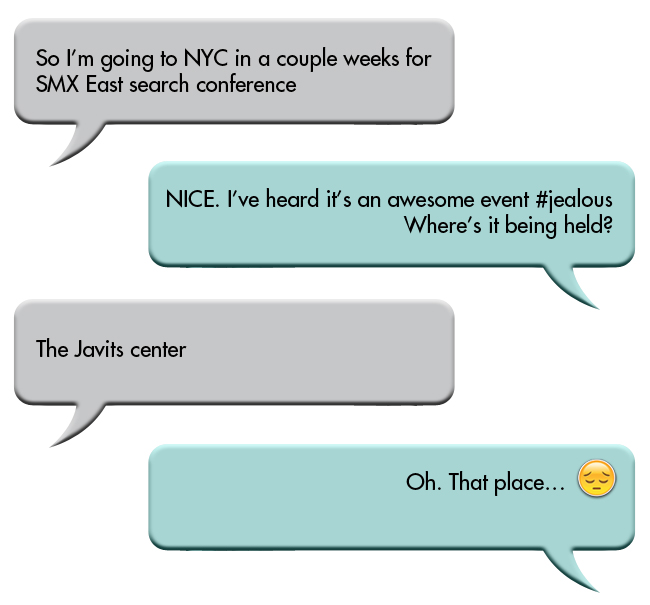
Weeks before the conference started, if SMX came up with friends or colleagues I kept having the same strange conversation again and again…

Javits

So by the time Day 1 of the conference arrived, I had mixed feelings (to say the least) and as we got to the end of 17th and were waiting at the crosswalk, the much ballihooed Javits Center was all you could see across the street. A bleak mountain of glass and steel that could probably double as Superman’s Fortress of Solitude should he ever get tired of going to the north pole. But it is a conference center after all, so how much architectural fanfare should be expected?

Once inside we went through the check in process, got our badges and were then pointed to a swag table where we received a black cross-body backpack full of vendor sales material. The backpack was cool and the spam inside was to be expected, but the problem was that now we’re here for the whole day with yet another thing to carry around. I myself already had a laptop bag and a purse… and now backpack makes 3. Awesome. There were also no lockers or coat check areas around so we were stuck with quite a bit of “luggage” for the duration.

But I digress and will just say it would have been great if they’d handed out the swag at the END of Day 1 instead of the beginning. Rant over. ☺

Hope you weren’t expecting a lot of personal space
Just to quickly touch on the meeting rooms for the panel discussions, all I say is that if you’re familiar with the ever narrowing personal space available on a flight in coach then you would have been right at home here.

It was unbelievably compacted in all of rooms and especially for the really popular sessions, we were like refugees packed into a grass hut. If you didn’t get there early, folks were grabbing spots on the floor, in the back (i.e. standing room only) or wherever they could find room to squeeze in. And not that anyone asked for my opinion, but if there was a way to RSVP for sessions in advance, that would helped manage the size of the crowd or move the really popular sessions to larger rooms. Just a thought.

Beware the badge police
The last slightly ranty thing I’d like to mention was the overzealous badge monitoring done by the event staff. I can’t say whether they work for SMX or Javits (and who knows maybe they were trained to be militant?) but they were everywhere and absolutely let you know where you stood in the pecking order of access.

My first encounter was after my colleague and I had gotten past the check in area and were down in the hall being used for SMX. We saw a handful of round tables just off the main walkway and headed over to stop for a minute and get organized, but no sooner had we walked up to a table but an attendant rushed over, demanded to see our badges, and immediately told us we had to leave that area. They said it was VIP only and that we could go to the open area at the end of the hall. Okay, that’s fine, but it wasn’t like we were trying to sneak into The Oscars. There was no signage stating it was a special area, none of the tables were full and we weren’t planning to camp out there as the first session was about to begin on 5-10 mins. So we left and went to the other area (where we were badge checked again before entering!) and all in all it really wasn’t the best “welcome” to kick off Day 1.

Now for the main event
It was a jam-packed three days at SMX East 2014 and each day had four distinct sessions (2 morning, 2 afternoon) with 3-5 panels to choose from. So it wasn’t a question of finding a session you liked, it was about making hard choices on which one to attend! I stayed more on in the SEO fundamentals, PCC, mobile and content tracks – but there were plenty others focused on SEM, social, link building and more.

Mobile Recap
There was a good focus on intent for search as it relates to mobile and how ranking on mobile & desktop are different because of this. Which is of course true as the ‘need state’ of the user is inferred to be different (and rightly so) as a mobile searcher needs something right now, versus desktop searcher is possibly planning to do something later.

Example: searching for “bank” on desktop vs. mobile

On desktop, I might be looking for investment advice, 401k information, loans, savings accounts – you name it. However on mobile, most likely I need some cash and just want the closest ATM. Therefore the search results delivered to me so me take that into account and serve up what is most likely my ‘need state’ based on device type.

It seems like Google is continuing to reward sites designed with this ‘need state’ in mind and as of Nov 18th Search Engine Land announced an experiment giving Google designated mobile friendly sites a better ranking in mobile SERP.

Here are few other fun-facts about mobile from the session that day:

Mobile is outpacing desktop x10
• 23% of organic search are from smartphones
• 62% of keywords have different ranks

Mobile keyword intent from data
• stock of product available nearby
• top X products/services
• reviews (especially locally/socially)
• video and interactions w/products
• click to call and locations nearby

Deconstructing Pigeon (no, it’s not a French haute cuisine dish)
On Day 2, I attended a great session that demystified some of what had gone down with the latest Pigeon update and here are a couple highlights from my notes:

• Google is recognizing generic searches (boats for sale) as branded searches
• Google is using keywords in reviews (yours and competitors) to generate search results
• Google also narrowed the search radius in suburban areas (meaning business owners with locations in small towns were hit hardest)

And while there were definitely some negative effects from the Pigeon update, here’s what you need to know to make sure you stay on the dean’s list.

Pigeon-Winners

Also the good folks over at Moz had some sage advice to share and provided a handy checklist I think everyone should take a look at and will find value from.

However as we all know, it’s been bird battle cage match over the last couple of months with updates, roll back and changes are happening faster than you can say “happy feet” so who really knows how this is going to net out? For the latest Penguin update (as of 12/5/14), it’s summed up nicely here from our friends at SEO Round Table.

The sky is falling! When lack of information (and planning) creates mass confusion and chaos

Pretty sure we’ve all been through a situation like this. It usually starts off when something breaks and the person that discovers it first starts an email chain (with everyone on the 3rd floor cc’d, including the boss) and panic ensues. Although usually buried somewhere in the sea of cc’s is at least one or two people who actually know what this is about – but before they can hit the ‘reply all’ button to draft a response, the Chicken Little of the office (there’s always one) has thrown a bucket of gasoline on this fire and everyone is on the next train to chaos-ville. Oy.

reply-all

In that situation, there’s not a lot you can do to stop the train – short of unplugging the email server from the wall – but if it does happen and you happen to be one of the lucky ones (?) who actually knows what’s going on and how to fix it, this is your time to step up and shine.

First off, reach out to any and all contacts you may have that can help (and only include those absolutely necessary on the email, if anyone at all). However do send a note to your immediate boss and let them know you are leveraging your contacts and will report back with any news asap.

Secondly, insert yourself into any emergency meetings or conversations so you know what’s going on. Like I mentioned earlier, it’s highly unlikely that you’re going to be able to contain the crazy, but at least if you know what the crazy is doing you won’t be doubling up on the same work.

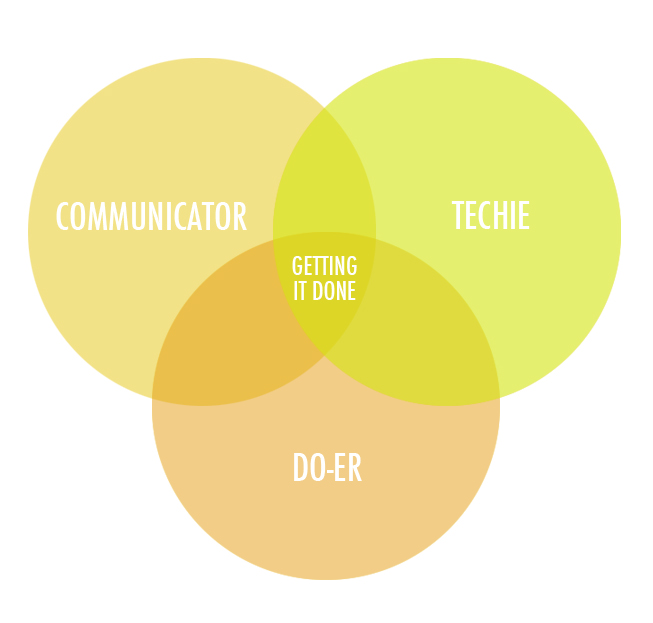
Thirdly, if at all possible, try to establish some sort-of chain of command that dictates who should be chasing down what. (Note: this will also be important for something I’m going to talk about later.) Most likely you’ll need these key roles filled:

3-CIRCLES

The Communicator; this is the person that will communicate updates to the executive team and any of key stakeholders
The Do-er; this person (most likely you) is the one who is going to work with whatever people and/or teams to resolve
The Techie; all problems are different, but in almost any scenario you’re going to need someone who’s technologically savvy, whether it’s a hardware or software issue you’re having

Besides those 3 roles, and any outside resources that you may be leaning on, close the circle. The more cooks you have in the kitchen the more likely you’ll start a fire.

As long as the communicator is doing their job, any execs or nosy-Nancy’s who are looking for answers are just going to have to be patient.


Once you get to the post-apocalypse stage, keep shining and showing your leadership skills!

Make a plan
Take everything that you learned getting through the recent chaos and use that to create a plan of attack that you can use should a crisis strike again in the future.

Man your battle stations!
I don’t know if that’s really what they say in the military or not, but regardless I know they do not say “run in every direction you can and just start pushing buttons”. So once you’ve established the plan and chain of command assignments: regroup with your new team, share the plan, make sure they understand what they are responsible for and let them ask questions. You may discover unexpected areas that have been missed!

Maintain open communication
Even if things are rolling along without any incidents, set up a monthly or quarterly check in with your team and any key resources. (Think of it like a practice fire drill without the loud noises, flashing lights and stampede as everyone makes their way to the one stairwell in the building.) Use these meeting to ask questions; Has any changed within the internal processes or with any outside vendors? Has anyone switched roles and you need get someone new in place? Also find out if there have been any updates to processes or systems, this may affect your plan and you need to know!