The Anatomy of a Performance Review

To be honest, I think an informed and productive performance review is right up there with hitting a hole in one. Not to say that it couldn’t happen – and certainly it does happen from time to time – but it’s a rare occurrence, which makes most of the reviews given equal parts depressing and disappointing.

In light of that sad truth, often times a performance review becomes a game of passive-aggressive political maneuvering in which your supervisor might try to perpetuate a personal agenda or simply use it as a time to vent while veiling their comments as constructive criticism. But neither of these scenarios are what a true review should be and it’s important to be able to separate the truth from the BS.

brain

Below are some examples of behavior to watch out for and if any of this sounds familiar, take heart, and also take this “feedback” with a grain of salt (or maybe a handful).

The “Personal Agenda” Review
Unfortunately if you have a difficult boss then you’re probably already prepared for a performance review that will be a less than pleasant experience. The challenges faced working with them on a daily basis will likely only be highlighted during that conversation, but at least if you are aware of that in advance you can prepare yourself and be ready to handle it professionally.

They may say things to undermine your confidence or focus more on mistakes versus successes and in the past, I’ve been guilty of letting negative comments like these affect my self-esteem. Even worse, it caused arguments with people in my personal life because I allowed it to eat away at me and undermine my goals and behavior. But what I realized later, and want to share with you now, is after getting some perspective on what had was said I was able to separate the fact from the fiction.

In my case, the feedback came from a boss who was extremely controlling, insecure about their own abilities and narrow-mindedly ambitious. In other words, this person was never going to let anyone else shine too brightly for fear that it would hurt their standing.

None of these are traits of a good leader.

Once I took these other factors into account, I realized that the comments made were to support the personal agenda of this boss. Not factual comments based on a true assessment of my skills and contributions. So while it’s hurtful when someone says negative (or even untrue) things, remember to keep things in perspective. You know the work you’ve done and how much effort you’ve put into it. Also keeping a list of the things you do, especially new projects or additional tasks you take on, as this will help you not only show growth in the role but validate your contributions to the team. Think of it as an ever-evolving job description and make sure to continually update this list with your accomplishments!

Red-flag-bsThe “Venting” Review
There are also times when a boss may decide to use your review time as an opportunity to get a few things off their chest, which is unfortunate.

But is that is the case, here are a couple things to look out for:

Negative feedback, without examples:
Right off the bat this should raise a red flag because if something needs to be corrected, then logically at some point you would have done something incorrectly. As an example, let’s say it’s how you communicate with senior leaders. If that really was an issue, then there would be an email or some communication vehicle available to review and improve upon. But is this is said as a blanket statement without any specifics, be wary, and ask for an example!

Negative feedback, from something that happened (weeks/months) ago:
This is another example of shady, not to mention extremely unprofessional, behavior. First off, if you did something that was seen by your boss or others as not being handled correctly, why wait to bring it up? Especially if it’s a repetitive task or something that visible represents your department. If that’s the case, it should have been addressed immediately so you could learn from your mistake and correct it.

Bringing it up later shows not only lack of leadership, but also lack of importance. In this instance I think it would be fair to say, professionally of course, “I was unaware that ______ was not being handled properly. Moving forward, please inform me sooner so I can make any needed corrections.”

All in all, your review will come down to the communication style of your boss, the working relationship you share and (hopefully) a fair assessment of your work. But the most important thing to remember is to evaluate what is said versus what you know you’re bringing to the table and determine where they intersect. After all, no one is perfect and insights from others can serve as growth moments to help you continue improving and moving forward with your career.

Just be sure to evaluate what’s said, ask for second opinions and make sure you don’t allow someone to throw you off course with unnecessary criticisms that are not designed to help you improve.

Chasing Bubbles: How to rein in unrealistic ideas and get the most out of brainstorming

You may not have blown many bubbles lately, but it’s hard to argue the delight and whimsy that comes from taking a deep breath and creating gleaming spheres of light that float on the breeze. Am I right? Such joy is also the case with unabashed brainstorming and letting your creative juices flow to develop new and exciting ideas.

Although everyone has their own take on how ideas should be sourced. For example, the fine folks at Fast Company can’t seem to make up their mind on whether “brainstorming” is a good idea or not.

Screenshot

Since 2011 they’ve reversed their decision 5 times by posting contradicting articles on the topic. But whether you call it brainstorming, team-building exercises, creative collaboration or whatever, there’s definitely a need to call one of these pow-wows every once in a while to get fresh ideas on the table.

However in this post I’m not going to focus on what you should call it, but instead outline some recommendations for structure, defining goals before you get started and how to rein in unrealistic ideas without being labeled “dream-crusher”. (Because no one wants that written on their name tag.)

Bubble Making 101

Before you start looking at the calendar and sending Outlook invites to the whole office, it’s important to have an outline of what you want to accomplish. Also make sure your boss (or whoever the key decision maker is) has signed off, because if you’re going left and they’re going right it’ll end up being a waste of everyone’s time.

Here’s a quick list of things you want to be sure you have locked down:

What’s the task at hand? Are you coming up with something new or revamping something already on the market?

What’s the goal at the end of the brainstorming? Do you want a list of 500 general ideas or 10 further developed concept ideas?

How much time do you have for the meeting? If this is an all-day affair, there’s definitely room to include some unstructured time, but if it’s only 2-3 hours you’ll need to make sure you have a firm agenda and stick to it.

Who’s driving the bus? It’s important to identify who will be running the session and that they keep everyone focused on the task at hand.

Beneath The Suds

Technically the definition of brainstorming is throwing any kind-of idea out there to see if it sticks, but it’s also important to be realistic. If there are things you know the company will never go for, set up those guardrails early and enforce them. Otherwise you’re devoting time and resources to develop ideas that will never see the light of day, and much like our glistening bubble friends, they may look pretty but they don’t last long.

Stay on TaskIn addition to that, be wary of good ideas that get blown up by unnecessary or unrealistic add-ons. (If a small bubble is shiny, then a bigger bubble must be even shinier!) Whoa there. This goes back to what was said in the beginning: know your goals for the session and what’s really possible to execute.

From personal experience, I’ve seen lengthy conversations develop over the discussion of completely over the top, high-cost and potentially unmanageable marketing ideas. How is that a good use of anyone’s time? That’s why it’s imperative to stay on task, with one eye on the goal and the other on the agenda.

Runaway Bubbles
You might be thinking at this point, why do we keep talking about bubbles? (Or maybe, “I need to stop and pick up some Calgon…” Who knows ☺) But for the purposes of this post, the idea of chasing a bubble seemed like a good analogy to illustrate how quickly ideas can be developed, overblown and then quickly fade away. So in this last section, let’s quickly talk about reining in bad ideas before they get out of control.

pigWe covered some of this in the paragraphs above, but that’s if you’re able to put the kibosh on something before it even gets started. But what if something is already in play? Maybe the purpose of your brainstorm session is to correct a bad idea that’s already been executed. In which case it’s important to proceed thoughtfully – otherwise you risk putting lipstick on a pig – and in our case we’re trying to save Wilbur from a Mary Kay makeover.

Bad ideas can get started in a number of ways, but a likely culprit is someone making a decision for an area of the business that they shouldn’t be. For example: accounting making a decision for marketing or vice versa. If that’s the case, don’t be afraid to shut it down. Accounting shouldn’t be dictating a marketing campaign just like marketing isn’t telling them how to pay invoices.

Of course it’s always better to play nice in the office and across departments, so if this is the situation you’re in, the best way to unravel the knot is to open up a dialog.


“What’s the total cost?”

“What’s the expected ROI?

“Does this speak to our demographic?

“Does this bring us new customers?”

“How long has the program been running and what have we gained – or lost?”

“Does this align with our brand?”

These will vary depending on the program and your business model, but you get the idea behind the questioning. It’s to identify: “Why are we doing this” and “What are we getting out of it?” Oh and remember to let the bubbles float on by… there’s no ROI if you catch one.

Welcome To The Jungle: My customer service experience with Amazon.com

The subject matter for this post is a little out of the norm for the blog, but having good customer service is certainly a cornerstone to running and maintaining a successful business. So as marketers, if you’re focusing on driving traffic to your business, you’d better be sure your house is on order on all sides. Customer service being at, or near, the top of that list.

What brought this up was the experience I had with Amazon recently when trying to return an item. Which you’d think would be a no brainer, except I seemed to have stumbled upon their Achilles’ heel because what I needed to return was larger than a hardcover edition of Lee Child’s latest thriller.

It’s actually a hybrid trainer; meaning it’s half elliptical and half recumbent bike and truth be told, I’d love to be able to use it and didn’t really want to return it. However after running into some issues with key pieces of the equipment not coming together as they are supposed to and receiving ZERO help from Proform customer service, I decided to join a gym and return it. (Extinguishing my dream is home workouts and multitasking during weekend TV binge-watching.)

Welcome to the Jungle

Welcome To The Jungle

What happened next is hard to describe concisely, but I’ve tried to whittle it down to the main plot points of the story, which began with a simple “chat” session between myself and customer service. On this chat I explained the issues with the equipment, the lack of support from Proform and that I was ready to give up and just return the darn thing. The person on the other end was sympathetic and said they would begin the return process, all I needed to do was take apart the equipment and pack it up, they would provide a prepaid UPS label and schedule the pick-up.

All of that sounded simple enough, until reality set in and I realized a couple things: #1 The original box and packaging had been recycled and was gone. But more importantly, the box had been the size of small refrigerator. Where in the world was I going to find something that size to hold everything? #2 This thing is the size of a smart car and extremely heavy. When it first arrived I had to open the box where it had been left and take it in piece by piece. So how exactly was this repackaging going to happen… in my front yard? That’s classy.

I reached out to Amazon again, explained my story for the 2nd time and included the aforementioned details that had occurred to me after the initial call. This new person said Amazon has a “large item returns” department and he would pass along my information to them – and since it was the weekend so he said they would call me on Monday.

Well no one ever called, however someone did schedule a pick-up with UPS and they came to my house twice trying to collect the equipment. I had to call UPS, apologize for the miscommunication and cancel the pick-up. (Frustration was beginning to build.)

The following Tuesday, I called Amazon and explained for the 3rd time what was going on. This person was less sympathetic, told me my item did NOT qualify as a large item return (read: baffling) and brought back the original course of action: pack it yourself and we’ll give you a label. (Frustration is now rising from defcon level 5 or 4.)

KermitIt was clear I wasn’t going to get anywhere with this person so I asked to speak to a manager, she got on the phone and recanted my story for the 4th time. Her solution was even better than any I had heard so far… she wanted to know if I could just take the equipment to UPS and have them pack it up? Yes, you read that right. In the stunned silence that followed, I fought back the urge to tell her how completely asinine that idea was and to ask if she knew the difference between returning a mixing bowl and returning an elliptical machine? I finally responded and said that was not a viable option and wanted to get back why the mysterious black-ops large item return team couldn’t help me?

But you could tell we were getting close to passing her level of influence, so she told me she’d reach out to them and call me back. A few hours later she did call back (twice actually) but unfortunately I was not in a place to take calls and planned to get back to her shortly. However when I checked the two messages she left on voicemail, neither one included a call back number. Neither one. She did say in the messages that the large item team had agreed to help and that I needed to call them back to set it up. Which would have been fine and dandy if I’d had a phone number to reach them. (Defcon level 4 moving to level 3.)

Level 1-5Following these completely useless voicemails, I emailed Amazon and told the whole story for the 5th time. What I got in response was unbelievable.

The person who emailed managed to simultaneously apologize while also rescinding the offer of large item team helping. He then trotted out the old “pack it yourself” routine and signed off with an insulting offer to apply a $10 credit on my account for my troubles. It was at this point we completely skipped over level 2 and landed firmly at Defcon 1. Man your battle stations people.

After giving myself a chance to calm down, I called Amazon yet again. When I was connected with a customer service agent I started the conversation as follows, “I just want to put this disclaimer out on the table; I realize what’s been going on is not your fault and I am certainly not blaming you. But I want you to know that I am beyond frustrated by what’s happened over the last few days.” The woman thanked me for my candor and said she wanted to help.

So for the 6th and final time, I told the whole sordid story. After hearing everything I had to say, reviewing the notes on my account and speaking to her manager she responded with this, “Well I have good news and bad news. The bad news is I can’t help you return the item, but the good news is we’re going to issue a full refund.”

Wow. I didn’t see coming.

And while I’m extremely relieved the situation has been resolved and grateful they were willing to “make it right”, it leads to the bigger issue I’d like to address. Why did it take 6 different encounters to find someone competent who could actually help? Although I think everyone can agree this situation is not limited to Amazon, but applies to all companies with customer service departments; it’s all in who you talk to. But why? Don’t they all go through the same training and isn’t there testing to pass the training??

Let’s also call my situation what it really is… making it right is just the nice way of saying they paid me off. And sure, a couple hundred dollars isn’t even a blip on the radar for a company of their size. But if they keep doing that because folks are continually subjected to their gauntlet of ineptitude then surely it will start to affect them at some point.

Looking at the bigger picture; investing in better training, on-going training and spot checks (aka secret shoppers) would help shore up these gaps. In the meantime perhaps they should discontinue including, “Earth’s Most Customer-Centric Company” in their email signatures, as I don’t think they’re there just yet.

Starting a new job: Expectation vs. Reality

Job Expectation vs RealityAs time rolls on, often a job gets monotonous or perhaps you get typecast in certain role or with specific responsibilities and growth opportunities are not available. Whatever the tipping point may be, there inevitably comes a time for all of us when we’re ready to move on. Which leads me to the meat and potatoes of this post (fyi we’re going to skip over most of the job search/interview process as that deserves it’s own story) but once you’ve landed that new job, how do you deal with your expectations of the job versus the reality of the day-to-day?

A new job, as with everything else in life, should be taken with a grain of salt. For example: we all know that the food images in commercials are not exactly how the food is going to look when you get to the restaurant… the swimsuit the model is wearing is going to look different on you… the DIY project is probably going to look a little different than the finished project on HGTV. But you get the point – and starting a new job is no different. Hopefully though the chasm between what was advertised and what life is like in your new office isn’t worlds apart, but if it is, that’s what were to discuss and talk about how to cope.

JOB EXPECTATION

Unicorn Farm Now Hiring

So you found a new job that seemed to be everything you were looking for, add to that you’re ridiculously qualified for it and you got through the interview process with flying colors. Now it’s time to do meet the team and do the work.

Integrating into a new office has its challenges to be sure, but as long as you stay open-minded and aware of your surroundings everything should be fine. Typically within 2-4 weeks the social piece starts to work itself out and even if you haven’t made an office “bestie” yet, at least by now people have started to recognize you.

Some companies also have a meet and greet process wherein your new boss will give you a list of people they’d like you to meet as it’s likely you’ll be dealing with these folks on the regular in your new role. Now don’t get me wrong, the premise of this idea is a good one, but let’s face it they’re basically asking you to go on a series of “blind dates”. Which is awkward. My recommendation (if you can swing it) is to put off these “dates” until you’ve been in the job a couple weeks, have been to a few meetings and have started to receive assignments from your boss. At that point you’ll actually have questions for these folks or at least have a better idea of what your job will be and how you might be interacting with them.

But let’s get the focus back on the expectation piece. Specifically what happens when the job was advertised a certain way, but once you’re actually doing it things are completely different? Taking into account a 10-20% margin of BS that might have been added to the job description by a hiring manager, what about the rest?

I like to give analogies to illustrate a point, so we’re going to use Jake (no, not from State Farm), who was just hired as an Email Marketing Manager for our example. Jake has been working in email for 5+ years and was running all the email campaigns at his previous company; he worked with the creative team to develop the assets, the clients to gather the content and the analytics team to add tagging to all emails for reporting. He’s done it all! But his previous employer had no plans to promote him from Email Coordinator to anything more, so when he saw an opportunity for advancement at another company he applied.

The job was advertised as a leadership role in Email for all of the new companies current clients and Jake was excited for the challenge. But as the weeks have rolled by and Jake is acclimating to his new role, things are not as expected. Jake isn’t being allowed to lead or give input on email campaigns, creative, analytics or reporting. He’s only been tasked with chasing down information and delivering it to other teams (who were already in place when he started) to bring to completion.

JOB REALITY

Making a suggestion#1 You’re an expert in your trade, but no one wants to hear what you have to say.

Whether it’s email marketing, landscaping, health & wellness or real estate, I think we can all agree this is/would be frustrating. You’ve worked for many years to learn, grow and establish yourself in a certain area and would love to share that knowledge but it’s not being accepted. What to do?

Solution Recommendation: Talk to your new boss and with a professional approach state your case. Explain that you were under the impression you were hired for your background in “____” but it’s been difficult to get a seat at the table to share that knowledge. If it makes sense have an example to share, but be sure not to present it in a “throwing under the bus” way. You never want to position yourself as you vs. another person/team. (Even if that’s actually what’s happening.)

#2 You were told you’d be leading but all you’re doing is chasing.

Again this side effect could be applied to a job in any industry and the way to resolve it is universal.

Solution Recommendation: Talk to your new boss. Unless it’s your boss who’s sending you on 1 fool’s errand after another, then it might be time to go to HR. But no matter who you talk to, be sure to have documentation or examples to share professionally. Also it can’t hurt to practice what you’re going to say and create a list of talking points for yourself. (Remember this isn’t like venting to your friends at happy hour.) These people have other things to do and while they should be inclined to want to help resolve this, that doesn’t mean they want to listen to you vent.

Organize your thoughts, bring 1-2 examples and keep things succinct. Stay away from naming name’s when at all possible and put the unpleasantness your bringing up back on you. For example: “I want to understand the process” not “The current process doesn’t work”.


Hopefully having these conversations will bring about a shift and your new work-life will improve for the better. If that’s not the case, carefully consider what your next steps might be.

If the job is tolerable, look into taking online classes in your free time to continue to build your skill set while you’re there. Just because you’re not learning anything new from this employer doesn’t mean you should allow your skill building to languish. Try to tough it out for at least 12-16 months, network as much as you can and then begin looking for something else.

If the job is not tolerable, it’s time to dust-off the resume and begin job-hunting again. One bright side though, now you have additional questions to ask on future interviews to be sure you don’t get into this same situation again.

The sky is falling! When lack of information (and planning) creates mass confusion and chaos

Pretty sure we’ve all been through a situation like this. It usually starts off when something breaks and the person that discovers it first starts an email chain (with everyone on the 3rd floor cc’d, including the boss) and panic ensues. Although usually buried somewhere in the sea of cc’s is at least one or two people who actually know what this is about – but before they can hit the ‘reply all’ button to draft a response, the Chicken Little of the office (there’s always one) has thrown a bucket of gasoline on this fire and everyone is on the next train to chaos-ville. Oy.

reply-all

In that situation, there’s not a lot you can do to stop the train – short of unplugging the email server from the wall – but if it does happen and you happen to be one of the lucky ones (?) who actually knows what’s going on and how to fix it, this is your time to step up and shine.

First off, reach out to any and all contacts you may have that can help (and only include those absolutely necessary on the email, if anyone at all). However do send a note to your immediate boss and let them know you are leveraging your contacts and will report back with any news asap.

Secondly, insert yourself into any emergency meetings or conversations so you know what’s going on. Like I mentioned earlier, it’s highly unlikely that you’re going to be able to contain the crazy, but at least if you know what the crazy is doing you won’t be doubling up on the same work.

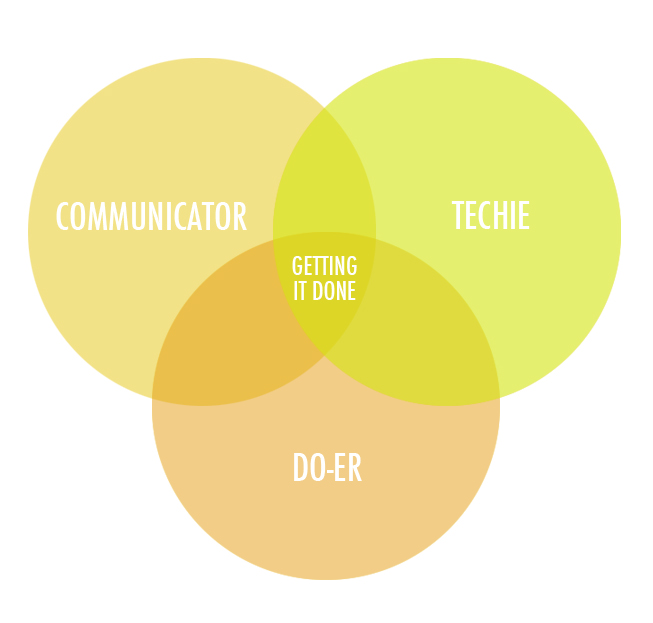
Thirdly, if at all possible, try to establish some sort-of chain of command that dictates who should be chasing down what. (Note: this will also be important for something I’m going to talk about later.) Most likely you’ll need these key roles filled:

3-CIRCLES

The Communicator; this is the person that will communicate updates to the executive team and any of key stakeholders
The Do-er; this person (most likely you) is the one who is going to work with whatever people and/or teams to resolve
The Techie; all problems are different, but in almost any scenario you’re going to need someone who’s technologically savvy, whether it’s a hardware or software issue you’re having

Besides those 3 roles, and any outside resources that you may be leaning on, close the circle. The more cooks you have in the kitchen the more likely you’ll start a fire.

As long as the communicator is doing their job, any execs or nosy-Nancy’s who are looking for answers are just going to have to be patient.


Once you get to the post-apocalypse stage, keep shining and showing your leadership skills!

Make a plan
Take everything that you learned getting through the recent chaos and use that to create a plan of attack that you can use should a crisis strike again in the future.

Man your battle stations!
I don’t know if that’s really what they say in the military or not, but regardless I know they do not say “run in every direction you can and just start pushing buttons”. So once you’ve established the plan and chain of command assignments: regroup with your new team, share the plan, make sure they understand what they are responsible for and let them ask questions. You may discover unexpected areas that have been missed!

Maintain open communication
Even if things are rolling along without any incidents, set up a monthly or quarterly check in with your team and any key resources. (Think of it like a practice fire drill without the loud noises, flashing lights and stampede as everyone makes their way to the one stairwell in the building.) Use these meeting to ask questions; Has any changed within the internal processes or with any outside vendors? Has anyone switched roles and you need get someone new in place? Also find out if there have been any updates to processes or systems, this may affect your plan and you need to know!

Check Your Watch: The challenges of executing a marketing promotion across different time zones

Most everyone enjoys watching sports as a pastime and why not? Seeing a group of people chase, throw, catch, hit or kick a ball around is generally considered a good time. But what happens when all this action is going on across different time zones? Where do you set up a home base – or should you? In this post we’ll look at how to tackle (sorry, had to use at least one sports puns) marketing a sporting event promotion successfully from sea to shining sea.

One of the biggest mistakes I’ve seen is when the marketing team decides that wherever they are is the home base, so everything is planned and designed through that lens. Which is an understandable point of view, but let’s try to step back a bit and consider a few things before planting our flag in Mt. It’s All About Me.

Also for the purposes of this exercise, let’s say the Marketing Team is located in Portland, OR so we have a point of reference. But feel free to ad-libs style the questions below and swap in your city so it’s a more useful evaluation tool.

• Is Portland also where there’s a large customer base? Where the corporate office is located does not always equal a fruitful customer base so be careful with this one.
•• Ask for sales numbers at all of your companies locations (if you have brick and mortar storefronts) or pull analytics from social media and web to see if there are any concentration areas where a lot of your business is coming from. In the end I would still not recommend picking one singular place as a focal point, but if you do find there are some ‘hot spots’ across the country maybe consider adding something extra to the promotion in those areas.

usa50

• Are you working with an agency? If yes, then make sure you ask them to consider point #1. An agency could be located anywhere (near or far) from the corporate office much less any customer ‘hot spots’. Be sure you ask them about this and formulate a plan that will bring about the most success for the campaign, regardless of where the marketers are located.

• Getting back to the team in Portland (who’s also be rocking the Pacific Time Zone) keep in mind that you should be publicizing the times of the events in the most common way they are shared. Which not necessarily what makes sense for your own geography.
•• For example: NFL games. If you’re working on anything football related, you’ll notice that every game on the schedules is posted in Eastern Time. So if you’re going to create any collateral, I recommend doing the same. It’s one consistent message for your customers and if you provide any links back to NFL.com in any of your social campaigning, your customers will see information consistent with what you have shared with them regarding your promotion.

football
Now that we’ve covered all of that, and still using football as an example, another big miss for brick and mortar folks is navigating the ups and downs of opening early or staying open late. Because as much as we’d all like to have one national campaign, let’s be real, that’s not going to happen. So keep these things on your radar:

• To use Sunday Football as an example, the first games start at 1pm Eastern which is 10am Pacific. You think, great! But wait.
•• What time do your West Coast locations open normally on Sundays? If it’s not before 10am, can they?
•• Do you have the staffing and budget to support those extra hours?
•• Also how will you let your customers know that you are opening early so you get the business to support and validate opening early.

• Now let’s talk about the last game on Sunday’s which starts at 8:30pm Eastern, 5:30pm Pacific. This one is great for West but for anyone in the East, those games can go on until 11pm or later, so let’s ask a variation of the same questions from above.
•• Do you normally stay open that late? Do you want to?
•• Do you have the staff or budget in place to support it?
•• And most importantly, does your promotion even make sense for a game that runs late into a Sunday evening. For most of America that’s a “school night” and we all have to get up and go to work the next day. Does what you’re asking your customers to do justify them staying out later then they normally would? What’s the value proposition and reason for them to give up on some shut-eye to stay engaged with your brand?

Overall the biggest take-away is this: plan strategically and thoughtfully.

Think about where your customers are, what they want and what makes the most sense for them dependant upon day of the week, time of day and what your promotion is offering. If it makes sense, which I think it does, plot out a marketing plan per time zone.

And don’t be afraid to ask your customers for their feedback too! We all know how people love to share their opinion (yay interwebs) so ask them. The answers might surprise you and offer up alternatives or add-on’s to the promotion that you hadn’t considered before.

Hope this has been helpful and please share any of your own marketing experiences in the comments! #GameOn


Thank you worldatlas.com for the USA map outline!

Office Dilemma: Someone stole your work! Now what?

To kick things off, let’s just call it how it is:
• It sucks when someone steals your work
• Sadly it probably happens to someone, somewhere everyday


Oh corporate America, definitely not known for being a level playing field and everyone giving each other high-fives and handshakes every time a match is over. So what do you do when someone takes your work/project/data and passes it off as their own? I don’t think anyone has all the answers, but here are a few tips to help navigate what is possibly one of work-life’s most sticky situations…

sound-off1. Stay out of the mud.
As tempting as it may be, don’t retaliate and don’t act in the moment. Emotions will no doubt be high when you find out what has happened, but sending an email/voicemail/text full of vocabulary usually reserved for Eminem lyrics is not the way to go.

It will only reflect badly on you, no matter how justified you may feel in sending it, and once it’s out there you can’t take it back.

2. Clear the air.
So even though a verbal smack-down or trip to the thunder dome are off the table (and typically frowned upon by HR) you can and do need to stick up for yourself.

Once the dust has settled, decided on a plan of action. Depending on your position and the position of the person taking liberties with your stuff, figure out what next steps would be most effective in getting the situation resolved.

Maybe it is an email, written thoughtfully, and outlining what has happened from your POV? Maybe it’s calling a meeting with upper management and the person involved? Whatever the next step is, make sure you only speak from what you know and what you have in writing. Making accusations or throwing out assumptions will only discredit you.

3. Proceed with caution.
Immediately following the points above about clearing the air, if you do want to meet with the other person make sure there is a 3rd party (aka a mediator) in the room. Having someone else there will limit any he said she said nonsense, should it come to that, and at this point you want to take every precaution.

After you get through all of that and once the situation has been resolved – or even if it’s not – then what? It’s hard to get that ‘team spirit’ back after someone has pilfered your goods, but life goes on.

My advice is to look at it this way:
6-months

Your career and personal happiness are much more important than whatever happened and in the end the goal should be to take the high road and be a team player that others enjoy working with. So don’t let someone else’s lack of professionalism and immaturity drag you down.

Or as our friend Eminem likes to say, “You only get one shot, do not miss your chance to blow. This opportunity comes once in a lifetime yo.”

Yo, indeed.

3 Tips For Creating A Winning Presentation

Winning PresentationMaybe it’s because I come from a graphic design background, but the importance of having a solid deck (powerpoint presentation) is not lost on me. And when I say ‘solid’, I’m not talking about all of the fancy facts and figures procured from the insights or finance department.

I’m talking about the basics like: fonts, page layout and presentation size. It’s unbelievable how many presentations I’ve seen from agencies, sales people, etc. that forget (or just don’t know) these 3 basic rules.

1. Fonts
While it may be tempting to put on your creative-hat and hope to impress your audience with the latest font you downloaded, keep in mind that you are the one that downloaded it – not the rest of the world. So unless you plan on attaching a font suitcase to your presentation and asking them to download and install it, stay away from adding pieces of flair to your deck.

Stick with the classics, also known as systems fonts or universal fonts, that most people would have on their computer so when they open your presentation it looks as you intended on not like gobbltyguck.

Fonts

So yeah, that will happen. However you can get around the font neutering by creating your presentation with as many bells & whistles and you can stuff into it, then saving as a PDF and sending that way. Word of caution though; From personal experience I’ve tried this route and you would have thought I’d sent the recipient a bouquet of dead roses (i.e. They did not like the PDF file.)

I think there’s something familiar and standardized about good ol’ PPT files which makes people feel more at ease because that’s what they are used to getting. Also (and I’ll touch more on this when we get into file size) you never know who’s going to get their hands on the file, so my advice would be to keep it simple and stick to the basics.

2. Page Layout
This step is tricky because sometimes you don’t know what the final outcome of the presentation will be… is it going to be printed, displayed during a webex, both? I actually worked on a deck once that was going to be projected onto a movie theater screen, which required some additional planning to say the least! On that size screen, you have to actually think of your deck as a movie and keep in mind where the eye goes (and what it can easily see) during a film. I took the stance of keeping everything at least an inch or two away from all borders and trying to centralize all of the text + images. That would make it easy for anyone, regardless of their seat in the theater, to see the content.

Anyway for all of those times when you don’t have to worry about a cineplex-friendly layout, here are a couple tips:

• Try to get as much info as you can in advance about where this presentation is going to go and how it will be used. If you know it will be printed, try to stick with standard sizes (letter and legal). Absolute last resort would be tabloid size (11×17) unless for whatever reason that is deemed reasonable. (Another personal experience tid-bit here: I received an agency presentation once in tabloid size and 30+ pages [goodbye rain forest]. Not only was it a nightmare to get printed for myself and the team, but carrying the thing around from meeting to meeting was like having a toddler on my hip. So if possible stay away from the dreaded tabloid size!)

• If it’s going to be displayed on a screen and not printed, try to find out what size. For example: movie theater or boardroom. This makes a difference. But in either case you want to use the 16:9 ratio setting which will work on most flatscreen tv’s and newer laptops.

3. Email-able Presentation Size
I think we’ve all had the vendor/boss/coworker who’s emailed over a presentation and said “can you take a look at this?” only to click on the attachment and realize it’s 20mb or more. (Really?) Not only does this fill-up your inbox but if you’re expected to forward it onto someone else, now you’ve got two copies of this beast on your email and sending/receiving will absolutely slow you down if you’re traveling and on wifi. No bueno.

So what to do? Well if it’s your presentation, it’s time to take it to fat camp:

• Make sure all of the photos you’ve inserted are optimized for web. If you’re not sure what this means, ask a friend who has photoshop and tell them you need 72 dpi JPG images stat!

• Be careful about embedding videos. Yes, it’s cool and all when you don’t have to navigate out of a presentation to show a video but I recommend following the Spandex Rule here. (Just because you can, doesn’t mean you should. Know what I mean?) In this case, embedding a video file directly can take a simple presentation from the 20mb range up to the 200mb range… (“I love it when you call me Big Poppa”) My advice, pull up the videos on You Tube and leave that tab open on your browser. If you need to hop over during the presentation it takes about 2 seconds and I don’t think anyone is going to fault you for that.

• And to wrap up the point I made earlier, you never know who’s going to get this presentation so keep things svelte. The worst thing would be having a CEO/boss/potential client receive your big fat deck, decide it’s taking to long and they’ll “download it later”. Which means… the Monday after never.